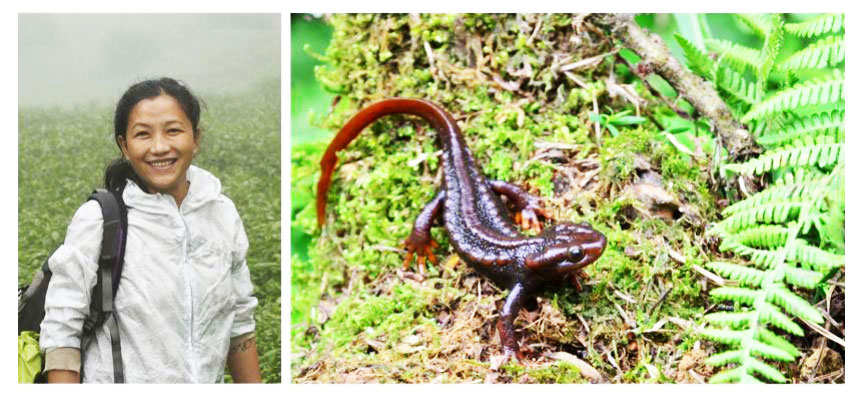
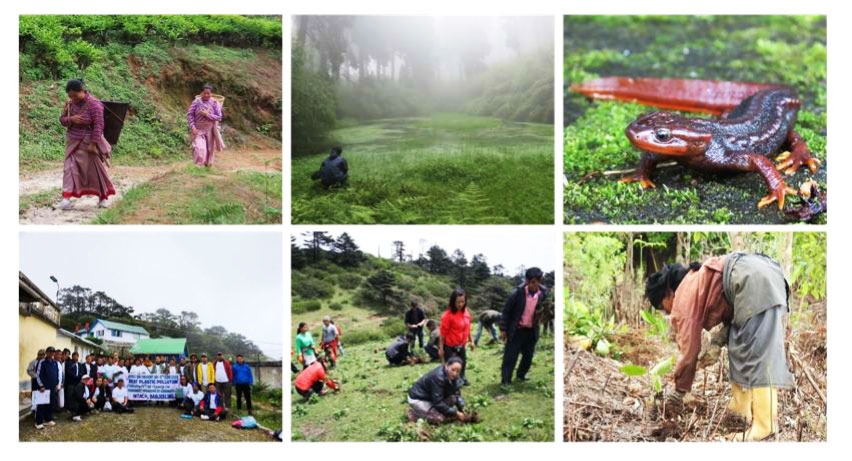
The habitat of the Himalayan salamander in the Darjeeling tea landscape, is undergoing complex changes. Cheaper Nepal tea, often marketed as ‘Himalayan tea’, has increased competition for estates at a time when climate change, erratic rainfall and ageing plantations have pushed down yields. Legacy estates are being acquired by companies focused on profits and diversifying into tea tourism to remain economically viable. At the same time, the region faces growing environmental challenges, including landslides, soil erosion, and shrinking freshwater sources linked to development.
The species is now listed as Vulnerable on the Red List of the International Union for Conservation of Nature (IUCN) as wetlands are increasingly drained, filled, polluted or disturbed. Barkha’s ultimate goal is to create a transboundary framework for wetland protection that extends to Nepal and Bhutan.
Globally wetlands are disappearing faster than any other ecosystem and one fifth could be lost by 2050. They regulate floods and store carbon. When managed effectively, the world’s 1.4 billion hectares of wetlands deliver ecosystem services worth up to $39 trillion (£29 trillion) annually — more than any other type of ecosystem, according to the Convention on Wetlands, the intergovernmental treaty which promotes the protection and sustainable use of wetlands globally.
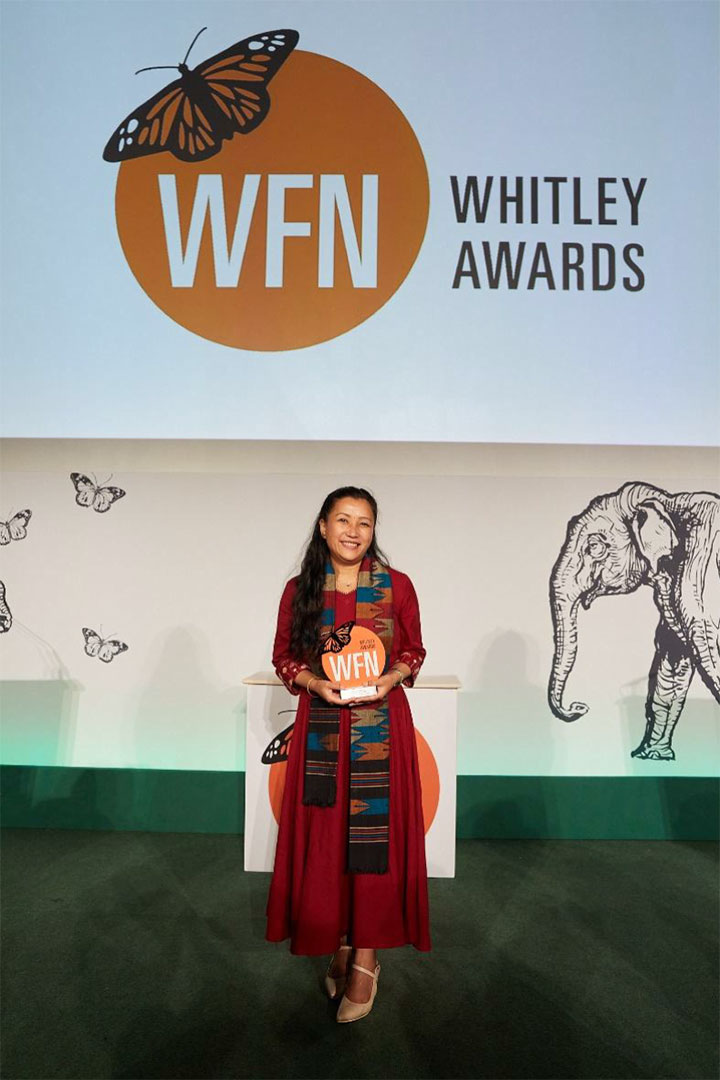
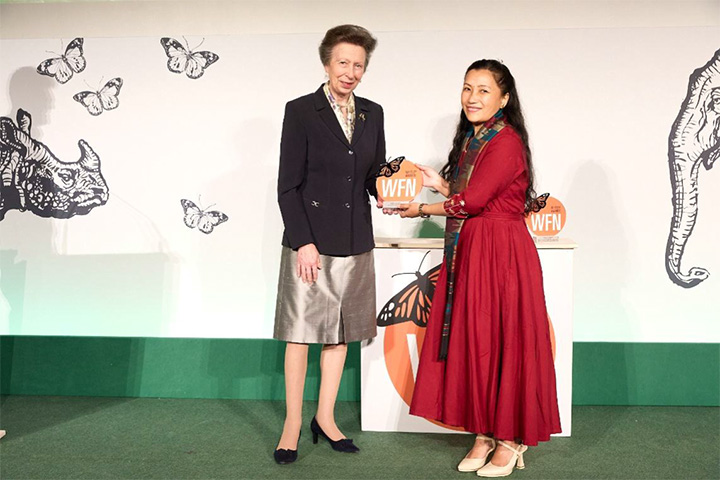
With her Whitley Award project, Barkha will strengthen partnerships with local communities, tea estate managers, and government agencies to cover the salamander’s breeding sites in: Margaret’s Hope and Nakhapani which are both within tea gardens; Namthing Biodiversity Heritage Site which is on government land; Majhidura which is both forest department and community land; Mirik, which is privately owned; and two sites at Pokhriabong which are shared between the forest department and local communities.
The wetlands where Himalayan salamanders breed are culturally revered water bodies, associated with local deities and rituals. In many villages, disturbing them has historically been discouraged. This respect extends to all life supported by these wetlands, including the Himalayan salamander, according to Barkha, who comes from an Indigenous community in Darjeeling and describes the salamander as resembling “a tiny dragon that swims quietly in a mountain pond.” Many local people began protecting it long before there was funding, recognition, or even encouragement.
Famous for what’s known as “the champagne of teas,” Darjeeling has experienced a boom in tourism to its landscape of misty forests and high-altitude tea estates created in the 19th century by the British Raj to reduce its dependence on Chinese tea. Tea gardens make up about one-fifth of land area in the Darjeeling hills. The region includes the Darjeeling Himalayan Railway, a UNESCO world heritage site, and spectacular views of Mount Kanchenjunga, the world’s third highest mountain.
https://whitleyaward.org/winners/barkha-subba-survivor-of-a-lost-world-saving-the-himalayan-salamander-and-its-wetlands/